


13 May Rabby Chrome Extension: why “it’s just another wallet” is the wrong shortcut
Most DeFi users treat wallets as simple key stores and endpoints for signing. That assumption — that every browser wallet is interchangeable — is the misconception that trips up even experienced traders when they interact across chains and complex protocols. Rabby’s Chrome (Chromium) extension is built around a different operational philosophy: instrument the signing process, model the state changes, and reduce blind spots before a single signature leaves your browser. For power users who shuttle assets across L2s, manage many token approvals, or run automated strategies, those design choices matter in concrete, measurable ways.
In this piece I unpack how Rabby’s extension works at the mechanism level, compare it to common alternatives, show where it materially reduces risk, and point out the limitations that still demand user judgment. I’ll also give a practical checklist for deciding whether to install Rabby as your primary browser wallet in the US market, and what to watch next as multi-chain tooling evolves.
How Rabby’s Chrome extension actually changes the signing flow
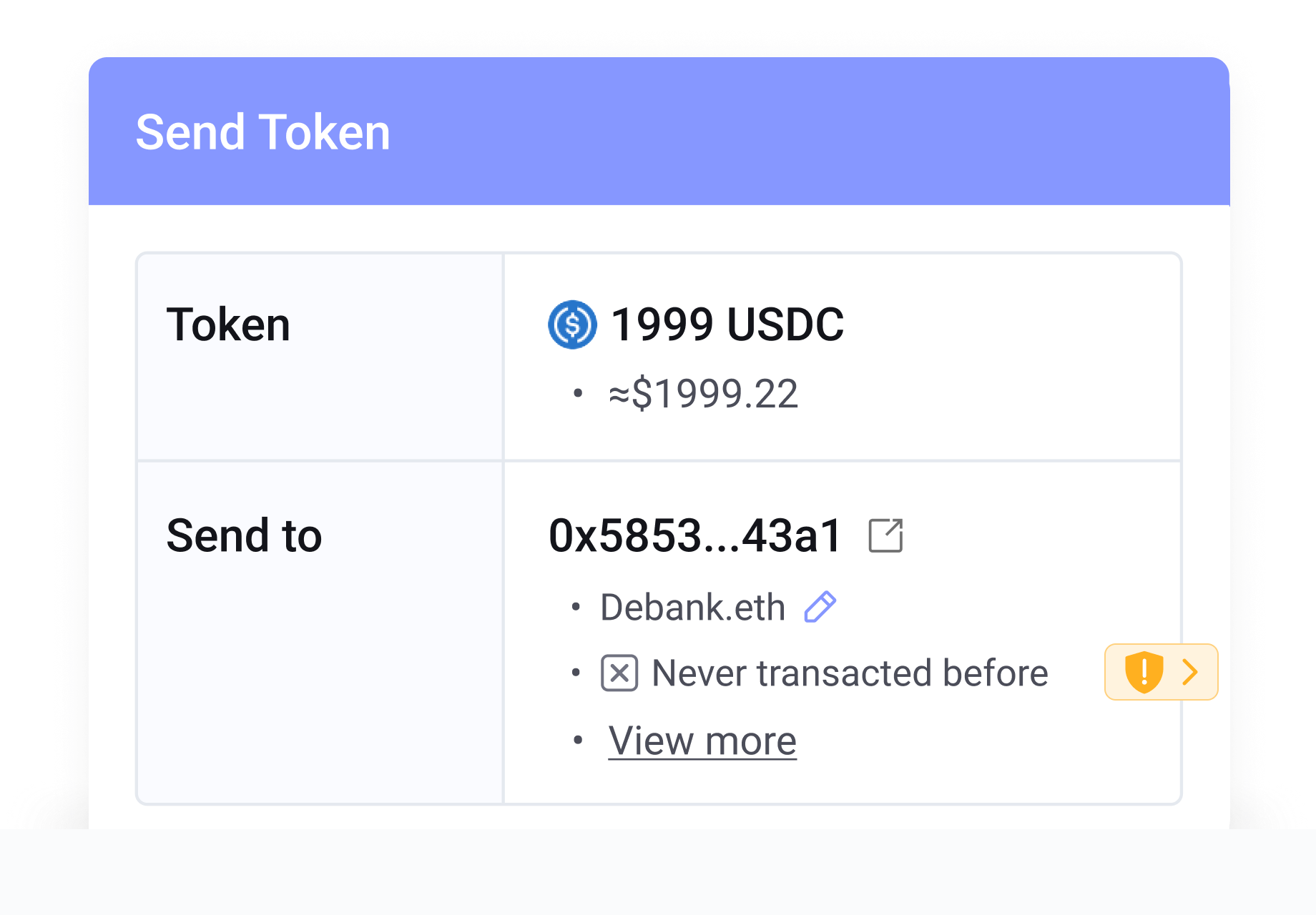
The core technical difference is transparency in the pre-signature window. Traditional browser wallets present a generic confirmation dialog: contract address, gas estimate, and maybe a human-readable summary. Rabby inserts a simulation and a risk scan into that step. Mechanically this is what happens when you click confirm on a dApp while Rabby is active:
– Rabby intercepts the transaction payload and reconstructs the VM call, then simulates the transaction against on-chain state (not merely reading a gas estimate). The simulation predicts exact token balance changes and fee consumption for the account you control.
– Simultaneously, a security engine evaluates the contract and call: is the target contract flagged in historical exploits, does this approval request match common malicious patterns, is the recipient address a zero-address or freshly created counterparty? The engine combines heuristics and on-chain indicators to surface warnings.
– Rabby then renders a human-facing breakdown: net token movement, native fee cost, and any detected anomalies. You can cancel, modify gas, or revoke approvals from that screen. This prevents the kind of “blind signing” where users approve large spend allowances or sign multipart interactions without seeing immediate state effects.
Side-by-side: Rabby vs. common alternatives (MetaMask, Trust Wallet, Coinbase Wallet)
Comparisons are most useful when tied to specific workflows. Below I contrast capacity across three questions DeFi power users commonly face: multi-chain operations, approval hygiene, and hardware/security integration.
1) Multi-chain ops and automatic network switching. Rabby supports over 90 EVM-compatible chains and will automatically switch your network to match the dApp you visit. MetaMask supports many networks but typically requires manual switching or configuration; Trust Wallet and Coinbase Wallet are competent but focus more on mobile-first flows. For traders arbitraging across L2s or interacting with Arbitrum/Optimism-based dApps, Rabby’s auto-switch reduces friction and the risk of operating on the wrong chain.
2) Transaction simulation and approval revocation. Rabby simulates transactions and shows exact token delta; it also exposes active approvals and lets you revoke them in-wallet. That combination is a step beyond basic approval views in MetaMask and Coinbase Wallet. For users who repeatedly grant allowances to DEXes and farming contracts, Rabby lowers the operational risk of leaving large approvals open.
3) Hardware and institutional support. Rabby supports Ledger, Trezor, Keystone and other hardware wallets, and integrates with multi-sig/institutional tooling like Gnosis Safe and Fireblocks. Functionally this parity with alternatives means you can pair Rabby’s UX advantages with proven cold-key security. If your workflow demands enterprise compliance or multi-sig guardrails, Rabby fits into those stacks rather than replacing them.
Where Rabby reduces real risk — and where it doesn’t
What Rabby materially changes is the human error component. Simulations and pre-signature risk scans reduce failures caused by misunderstanding transaction effects or accidentally approving permissions. For US users worried about rug pulls, phishing dApps, or mis-specified cross-chain transfers, Rabby’s tooling converts many ambiguous interactions into binary, inspectable outcomes.
That said, there are boundary conditions. First, simulation is only as good as the state snapshot and the interpreter. Complex contracts with on-chain randomness, off-chain oracles, or time-dependent logic may behave differently in production than in simulation. Rabby’s simulation reduces but does not eliminate that residual uncertainty. Second, pre-transaction risk scanning flags known exploit patterns and historical incidents — it cannot predict zero-day vulnerabilities or private key compromise. Third, Rabby does not provide a fiat on-ramp or native staking in-wallet, so your custody and liquidity onboarding flows may still require third-party services.
There is also a trade-off between convenience and surface area: the more networks and integrations a wallet supports, the larger its attack surface becomes. Rabby mitigates this by being open-source (MIT license) — enabling external audits — and by integrating hardware wallets and multi-sig solutions. Open-source status improves inspectability but does not guarantee operational security. Users still must practice key hygiene, limit approvals, and consider hardware isolation for large holdings.
Installing Rabby on Chrome: a quick decision framework for power users
If you’re considering installing Rabby’s browser extension, use this short heuristic to judge fit:
– You regularly interact with multiple EVM chains (including L2s) or move assets across them: Rabby’s automatic network switching and cross-chain gas top-up save time and reduce failed transactions.
– You grant frequent token approvals or use many dApps: the built-in approval revocation and transaction simulation help maintain approval hygiene and prevent accidental large approvals.
– You rely on hardware wallets or institutional custody: Rabby’s integrations mean you can layer it into existing control structures rather than replacing them.
– If you need fiat purchase inside the wallet or on-chain staking directly through the extension, Rabby currently lacks native solutions and you will need external services.
For US-based traders, regulatory and compliance framing matters: Rabby is non-custodial and does not hold assets, which keeps exposure to custody regulation low for users. However, any on-ramp or off-ramp you use to move fiat on- or off-chain likely introduces KYC/AML requirements through the provider, not through Rabby itself.
Security history and what it teaches about trade-offs
The 2022 Rabby Swap exploit (roughly $190,000) is a real data point worth unpacking. The development team froze the affected contract, compensated users, and increased audit coverage. Two lessons flow from that episode. First, even teams focused on security can be vulnerable at the smart-contract layer; wallet-level protections can mitigate but not fully remove contract risks. Second, rapid incident response and restitution matter — they don’t erase the loss but they do improve systemic trust. For a power user that means treating in-wallet protections (simulations, revocations) as a layer in a multi-layer defense, not as a substitute for contract vetting and limited exposure.
Practical checklist: installing and configuring Rabby for lower risk
1) Install Rabby on your Chromium browser (Chrome, Brave, Edge) and import or create a new account. Use a hardware wallet for large balances; Rabby supports Ledger, Trezor, Keystone, and others.
2) Enable the Flip toggle if you want to test Rabby alongside MetaMask without breaking other dApp connections. This allows A/B testing of how a dApp behaves under each wallet’s network-switching logic.
3) Before interacting with complex contracts, study the simulation output: confirm token deltas and fee estimates match your expectations. For cross-chain transactions, use the gas top-up tool if you need native gas on the target chain.
4) Periodically run the approval revocation tool and remove unnecessary allowances. For recurring DeFi operations, prefer narrowly scoped approvals (amount limits, single-use allowances) where possible.
5) Keep the extension up to date and monitor the project’s public audit reports; open-source code helps but maintain operational discipline: do not paste seed phrases into websites, and verify download sources.
FAQ
Is Rabby safe enough to replace MetaMask as my default browser wallet?
“Safe enough” depends on your threat model. Rabby adds useful security features (transaction simulation, pre-scan, approval revocation) that reduce common user errors. However, no wallet eliminates smart-contract risk or user-side compromises. For high-value holdings, pair Rabby with a hardware wallet or multi-sig and treat it as one layer in a defense-in-depth strategy rather than a single point of trust.
Can I use Rabby to buy crypto with a credit card inside the extension?
No. Rabby currently lacks a built-in fiat on-ramp. You’ll need to use an external exchange or on-ramp provider (subject to KYC/AML rules in the US) and then transfer crypto into Rabby-managed addresses.
How reliable are Rabby’s transaction simulations for complex DeFi interactions?
Simulations materially reduce ambiguity by predicting token movement and fees based on on-chain state. But they can be imperfect for transactions that depend on off-chain data, randomness, or rapidly changing pool states. Treat simulations as a risk-reduction tool, not a formal guarantee.
Does Rabby work with hardware wallets and institutional custody?
Yes. Rabby supports major hardware wallets and integrates with institutional and multi-sig solutions such as Gnosis Safe and Fireblocks, allowing you to combine Rabby’s UX and security features with enterprise-grade custody.
Final takeaway: for DeFi power users in the US juggling many chains and permissions, Rabby’s Chrome extension is not merely a cosmetic alternative — it shifts the operator’s epistemic position by making transaction outcomes visible before signing. That reduces a common class of user errors, but it doesn’t remove systemic risks tied to smart contracts, or the need for hardware-backed keys and multi-sig for large holdings. If you want to explore Rabby and its multi-chain tooling further, start here: rabby wallet.
