


11 Feb The Wallet Did Not Fail First: What Transaction Simulation Changes in DeFi Security
A surprising amount of crypto loss begins before a transaction is signed. The decisive error is often not a stolen password or a broken blockchain, but a mismatch between what the user thinks will happen and what the transaction actually instructs a smart contract to do. That distinction matters especially in cross-chain swaps, where assets, bridges, liquidity venues, fees, and settlement steps may be spread across several networks.
For a US DeFi user, a wallet is therefore more than a key holder. It is an interpreter positioned between human intent and machine-executed code. Transaction simulation attempts to make that interpretation visible before approval. The technology is useful, but it is not an oracle: a simulation can clarify a transaction’s expected effects while remaining limited by changing market conditions, contract behavior, and the assumptions of the simulation environment.
From blind signing to intent-aware review
Early cryptocurrency wallets treated signing largely as a cryptographic event. The wallet confirmed that a private key authorized a message or transaction, while the user was expected to understand the destination address, token amount, gas setting, and contract call. That model was workable for simple transfers. It became increasingly fragile as DeFi introduced exchanges, lending markets, vaults, token approvals, governance contracts, and layered aggregators.
A smart-contract transaction may contain a method name and encoded parameters that are not meaningful to a typical user. Worse, a request that appears to be a token swap may also grant an allowance, transfer assets to an unfamiliar address, or interact with a contract whose behavior depends on current state. The important security question is not merely, “Did I authorize this transaction?” It is, “What state change am I authorizing, and who benefits from it?”
Transaction simulation addresses that question by executing a proposed transaction in a controlled representation of the current chain state. The wallet can then estimate outcomes such as tokens received, assets spent, approvals created, fees paid, or whether the transaction is likely to revert. In practical terms, simulation converts opaque calldata into an approximate before-and-after account view.
This is a meaningful improvement over displaying raw hexadecimal data. It also corrects a common misconception: a wallet warning and a transaction simulation are not the same thing. A warning may flag a known address, suspicious approval, or unusual contract interaction. A simulation instead asks what the transaction is expected to do under specific conditions. The two approaches complement each other, but neither proves that an application is trustworthy.
Why cross-chain swaps make the problem harder
A swap on one EVM network already involves several variables: the selected liquidity pool, slippage tolerance, token decimals, approval status, gas cost, and the possibility of a failed or unfavorable execution. A cross-chain swap adds another layer. The user may send an asset on one network and receive a representation or native asset on another. Between those points, a bridge, solver, relayer, or liquidity provider may be involved.
The interface may present one coherent action, but the underlying process can be multi-stage. The first transaction might authorize or deposit funds. A separate system may observe that event, provide liquidity, and trigger delivery on the destination chain. If the destination step is delayed, the user’s experience no longer maps neatly onto the moment of signing. The wallet can simulate the transaction it controls, but it may not be able to guarantee every later event in another system.
That boundary is central. A successful simulation on the source chain does not establish that the destination asset will arrive at the expected time, that a bridge operator will remain solvent, or that the receiving token has the properties the user assumes. Simulation is strongest for local execution and weaker as the transaction’s economic and operational path extends beyond the wallet’s immediate control.
Cross-chain users should also distinguish between asset identity and asset appearance. Two tokens can share a symbol while having different issuers, contracts, liquidity, or redemption mechanisms. A simulated result showing that a token will arrive is not equivalent to a judgment that the token is liquid, authentic, or appropriate for the user’s purpose.
What a careful user should inspect
The most useful mental model is to read a transaction in four layers. First, identify the chain and the sending account. Second, inspect the assets leaving the wallet, including token approvals that may permit later transfers. Third, inspect the assets expected in return and whether the result depends on a minimum-out amount or a slippage setting. Finally, ask what remains outside the simulation: bridge completion, destination-chain delivery, token liquidity, and the reputation or incentives of the application.
Approval deserves special attention because it is easy to confuse permission with payment. An approval may not transfer tokens immediately, but it can authorize a contract to move them later, sometimes up to a very large limit. A swap that requires an approval can therefore create two security events: granting spending permission and executing the exchange. A safer workflow is to review both separately and avoid treating an unlimited allowance as a harmless convenience.
Slippage is another source of false confidence. It is the permitted difference between an expected exchange rate and the minimum acceptable result. A narrow setting can cause a transaction to fail when the market moves. A wide setting can allow execution at a materially worse rate, particularly in thin liquidity or volatile conditions. Simulation displays an estimate based on current state; it cannot remove the market risk that exists between simulation, inclusion, and settlement.
For readers preparing to install a browser wallet, the practical starting point is to use a trusted source for the rabby wallet download and verify that the extension is the expected product before importing or creating an account. Installation security matters because a deceptive extension can bypass many later safeguards. Never enter a seed phrase into a website, support form, or unsolicited pop-up, and treat a wallet installation as a sensitive security operation rather than an ordinary browser add-on.
Rabby’s role in the current EVM wallet landscape
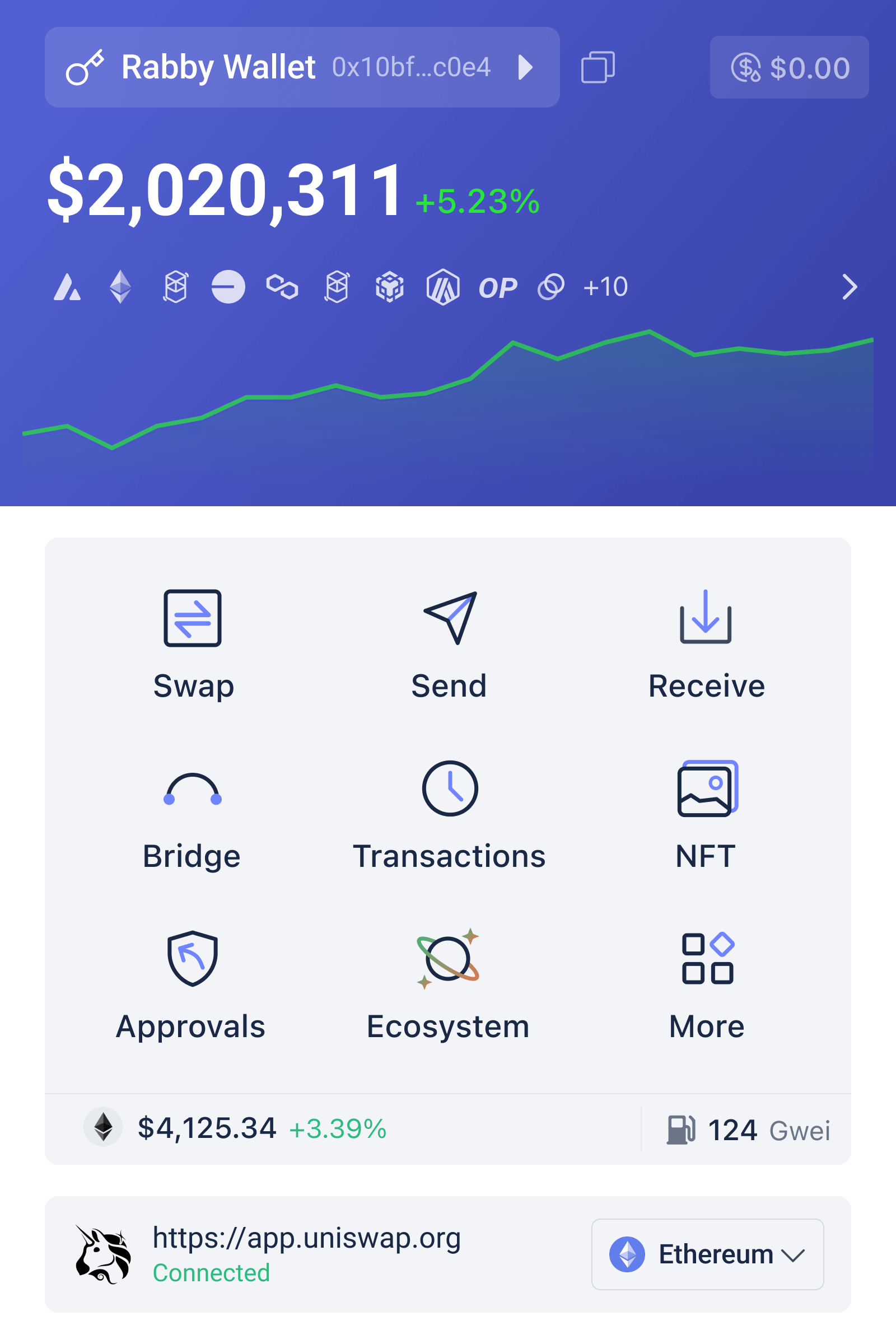
Recent project messaging describes Rabby as a wallet for Ethereum and EVM chains, reflecting the broader evolution from single-network wallets toward multi-chain interfaces. That direction is relevant to cross-chain users because network selection, contract interpretation, and transaction review become more important as applications span multiple environments.
Still, a broad chain footprint should not be mistaken for uniform safety. EVM compatibility means that similar transaction structures can be used across networks, but the surrounding conditions may differ sharply: liquidity, contract maturity, bridge design, token standards, RPC reliability, and the quality of application integrations. A familiar-looking prompt on a less established network deserves the same scrutiny as an unfamiliar prompt elsewhere.
The strongest use of a wallet such as Rabby is not to outsource judgment, but to improve the quality of the judgment a user can make. A clear simulation can expose an unexpected recipient, an asset leaving without a corresponding return, a suspicious approval, or a failed execution before gas is spent. That is decision support. It is not an insurance policy against malicious front ends, compromised contracts, economic loss, or user inattention.
Where simulation breaks down
Simulation is a forecast of execution under an assumed state, not a guarantee of future reality. The chain can change between the simulation and the mined transaction. Another trader may consume liquidity, a block may alter pricing, or a contract may behave differently because of timing, oracle updates, or external calls. Private transaction routing can also change the conditions under which a transaction is included.
There are deeper limitations. Some contract behavior is difficult to model when it depends on external systems, delayed messages, off-chain signatures, or destination-chain actions. A simulation may report a favorable local outcome even though the broader transaction path contains counterparty, bridge, or liquidity risk. Conversely, a conservative or incomplete simulator may flag uncertainty for a transaction that would execute safely.
The right conclusion is neither blind trust nor total dismissal. Treat simulation as one layer in a defense system. Check the application domain, verify the intended network, compare the recipient and token contracts, review approvals, use a sensible slippage limit, and begin with a small amount when the path is unfamiliar. For substantial funds, separate daily-use activity from long-term storage and consider whether the transaction’s complexity is justified by its expected benefit.
What to watch next
The likely direction of wallet design is toward richer representations of user intent: not merely “sign this data,” but “exchange this asset, on this network, with this maximum cost and minimum result.” If that shift continues, the most valuable improvements will be those that expose uncertainty rather than hide it. A useful interface should distinguish a simulated local result from an estimated cross-chain completion, and a known contract interaction from an unverified one.
For users, the signal to watch is not the number of supported chains or the visual polish of a wallet. It is whether the product makes boundaries legible. Can it show what is certain, what is estimated, and what depends on another protocol? Can it make allowances, destination assets, and fees understandable before signing? Those questions are more durable than any particular feature announcement.
Frequently asked questions
Does transaction simulation guarantee that a swap is safe?
No. It can reveal the expected effects of a transaction under current assumptions, but it cannot guarantee that the application is honest, the contract is bug-free, the market will remain stable, or a cross-chain destination step will complete as expected.
Why are cross-chain swaps riskier than ordinary swaps?
They usually involve more than one network and may depend on bridges, relayers, solvers, liquidity providers, or delayed settlement. Each additional component introduces operational and technical assumptions that may not be fully represented by a source-chain simulation.
What is the most important thing to check before signing?
Compare the intended action with the complete asset flow: what leaves the wallet, what approval is granted, what should arrive, which network receives it, and what conditions could cause the result to differ. If any part is unclear, pause rather than treating a familiar interface as evidence of safety.
The central lesson is simple but easy to miss: wallet security is increasingly about interpreting intent, not merely protecting keys. Transaction simulation makes that interpretation more visible, and multi-chain wallets can make complex DeFi activity more manageable. Yet the final responsibility remains analytical. A transaction can be valid, simulated, and successfully mined while still being economically poor or operationally risky. The safest user is not the one who signs fastest, but the one who understands which parts of the outcome are guaranteed by code, which are estimated by the wallet, and which depend on the wider system.
