


13 Jul What Does Transaction Simulation Actually Do — and Why DeFi Power Users Should Care?
How do you know a signed transaction won’t stealthily drain assets or approve an unlimited allowance to a malicious contract? That’s the blunt question transaction simulation tries to answer before you hit “confirm.” For DeFi power users operating across chains and dense smart-contract workflows, simulation isn’t mere convenience; it’s a mechanism that converts abstract bytecode into an actionable preview of outcomes. Understanding how simulation works, where it helps, and where it silently fails changes how you structure approvals, aggregate risks, and recover from errors.
This explainer walks through the mechanics of transaction simulation as implemented in modern EVM wallets, using Rabby Wallet’s approach as a concrete, serviceable example. The aim is not to praise a product but to show the causal chain: how wallet telemetry, local EVM replay, mempool data, and heuristic scanners combine into a decision-useful display — and which assumptions underlie that display.
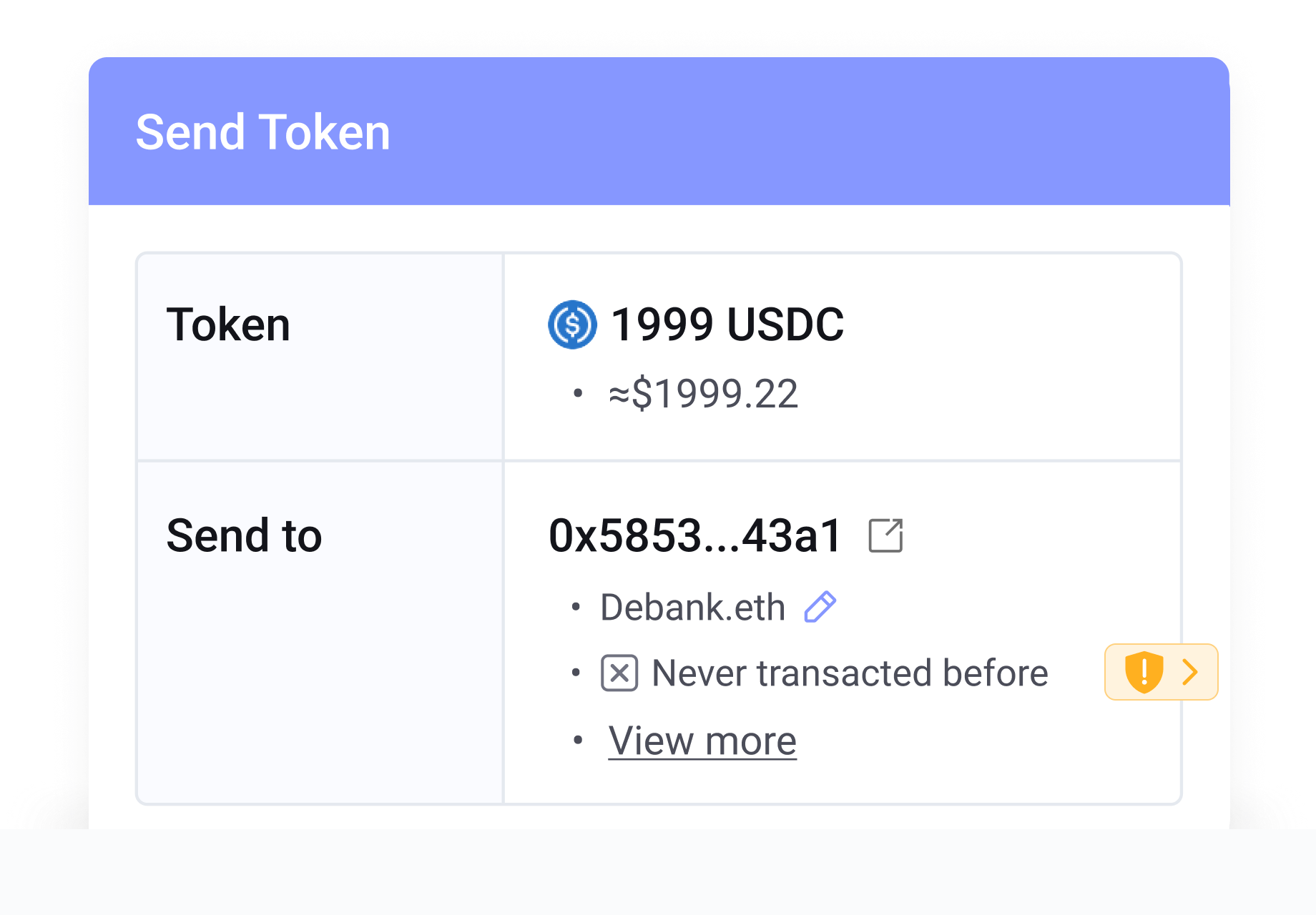
Mechanism: what a simulation actually does under the hood
Transaction simulation is a local or remote replay of the transaction against a model of blockchain state. Mechanically, the wallet takes the raw transaction (to, value, data, gas limit), feeds it into an EVM instance that uses the latest block state (balances, allowances, contract storage) and executes the same opcodes that miners or validators would. The output is a vector of concrete outcomes: token transfers, internal calls, reverted branches, gas consumed, and final balance deltas.
Two important sub-components make that raw replay useful in practice. First, a security engine compares addresses and contract bytecode against known-risk lists (hacked contracts, honeypots, proxy patterns). Second, a UI layer translates low-level results into human-friendly statements — “you will spend X tokens, receive Y tokens, and pay Z gas” — and flags suspicious approval patterns such as full-token allowances or transfer-to-external accounts. The combination prevents blind signing by turning an opaque payload into something you can sensibly vet.
Why simulation changes behavior: from blind signing to accountable signing
For a DeFi power user, two behavioral shifts follow reliable simulation. First, users stop trusting only the dApp UI; they can verify what the underlying contract call will try to do. Second, users adjust approvals and batching strategies: instead of giving unlimited allowances to a DEX, they may use spend-limited approvals or ephemeral approvals only for the transaction being executed. In short: simulation creates a feedback loop that converts signature consent into informed consent.
Rabby’s model builds this loop by pairing simulation with pre-transaction risk scanning and an approval revocation tool. The visible benefit is straightforward: you see exact estimated token balance changes and fees before signing. The less obvious benefit is procedural: seeing these details repeatedly nudges users to prefer patterns that minimize long-term exposure (limited approvals, hardware-signing for large transactions, or using multi-sig for treasury-level moves).
Where simulation helps most — and where it can mislead
Simulation excels at revealing deterministic outcomes given current chain state: whether a token transfer will occur, whether a swap will revert due to slippage, or the approximate gas cost of execution. It also exposes approval and allowance flows, which are the primary vector in many hacks.
But simulation has limits you must internalize. It depends on accurate state: if the node the wallet queries is out-of-sync, if mempool front-running occurs, or if the target contract involves off-chain or time-sensitive state, the simulated result can diverge from what happens on-chain. Simulations cannot predict third-party behavior (bots that sandwich transactions), nor can they retroactively reveal private keys or off-chain approvals already granted. Finally, a simulation is only as good as the heuristic lists and audits backing its risk scanner; open-source code helps independent review, but it doesn’t eliminate logic bugs or design errors in contracts you interact with.
Trade-offs to weigh when you rely on a wallet simulation
Speed vs. depth. A quick local EVM replay gives immediate results but may skip deep taint analysis that would detect complex, multi-step exploits. A deeper analysis pipeline increases latency and may require centralized services or more permissions.
Autonomy vs. infrastructure trust. Wallets that simulate locally increase trust-minimization. Wallets that query remote services for enriched risk intelligence can spot more threats but introduce a trust dependency on the service provider and require network connectivity.
User friction vs. security hygiene. Strict warnings and forced approval limits reduce exposure but can annoy power users who routinely batch complex transactions. Good UI design — clear risk gradations and granular override options — helps, but trade-offs remain.
Practical heuristics and a reusable decision framework
Here are four heuristics to integrate simulation insights into workflow decisions: (1) Treat simulation outputs as primary but conditional evidence: they show what will likely happen right now, not what might happen under adversarial mempool conditions. (2) When simulation flags an approval, prefer ephemeral or minimal allowances and use the wallet’s revocation tool regularly. (3) For high-value or institutional moves, prefer hardware wallets + multi-sig coordination: simulations reduce surprises but signatures remain the ultimate gate. (4) When interacting cross-chain, simulate each leg separately and verify gas top-ups; chains differ in gas token conventions and state timing.
These heuristics are pragmatic: simulation reduces many classes of accidental loss, but it cannot eliminate market risk, oracle manipulation, or all reentrancy-style attacks that depend on state changes introduced by other transactions between simulation and confirmation.
Where Rabby slots into this landscape
Rabby Wallet operationalizes many of these mechanisms: open-source architecture (MIT-licensed) so third parties can audit the simulation and the risk engine; automatic network switching to ensure you are simulating against the correct chain; support for over 90 EVM chains so multi-chain simulation is feasible; hardware wallet and institutional integrations so simulation outputs can feed into multi-sig or custody workflows; and a native revocation tool to close the loop on approvals. For US-based sophisticated users, these features lower practical friction when moving assets across Layer 2s and sidechains where gas and allowance semantics vary.
If you want to try these capabilities, a practical entry path is to install the browser extension and watch how the simulation output changes your behavior when using popular DEXs or lending platforms — especially during volatile markets. You can find the relevant extension here: rabby wallet extension.
Limits, failure modes, and what to watch next
Remember the 2022 Rabby Swap incident: even teams with simulation and security tooling can suffer contract-level exploits. The response (freezing the contract and compensating users) is instructive: simulation reduces user-side mistakes but cannot protect users from flaws in the contracts they choose to interact with. Therefore, combine simulation with external due diligence: prefer audited contracts, check code provenance, and limit exposure when interacting with new protocols.
Near-term signals that could change the utility of simulation include wider adoption of request-for-quotation/multi-party off-chain ordering (which complicates deterministic replay) and new L2 designs that change state finality assumptions. Also watch for richer on-device static analysis and formal verification tooling becoming lightweight enough to run in wallet flows; that would shift the trade-off on depth vs. latency.
FAQ
How accurate are balance changes shown by a simulation?
Accuracy is high for deterministic on-chain effects computed against the latest known block state: token debits/credits, fees, and reverts. Accuracy degrades when the transaction relies on off-chain information, or when mempool actions (front-running, re-orders) change the state between simulation and inclusion. Treat the numbers as precise under current state, probabilistic under adversarial timing.
Does simulation prevent all smart-contract exploits?
No. Simulation helps prevent mis-signed transactions and flags known-risk patterns, but it cannot detect unknown logic vulnerabilities in the target contracts, nor can it predict coordinated attacks executed by other participants after your simulation. It’s a powerful layer, not a comprehensive solution.
Should I stop using unlimited token approvals?
As a rule of thumb: avoid unlimited approvals unless you trust the counterparty and monitor the allowance actively. Use limited allowances for one-off operations, and use built-in revocation tools frequently. Simulation makes the consequences visible; policy (limits, revocations, multi-sig) enforces them.
How does automatic network switching affect simulation?
Automatic switching reduces user errors (simulating on the wrong chain) by ensuring the wallet targets the correct chain state for replay. That reduces a common mismatch where a user thinks a transaction targets L2 but signs on L1. Still verify the chain indicator before confirming—automation helps but is not infallible.
